


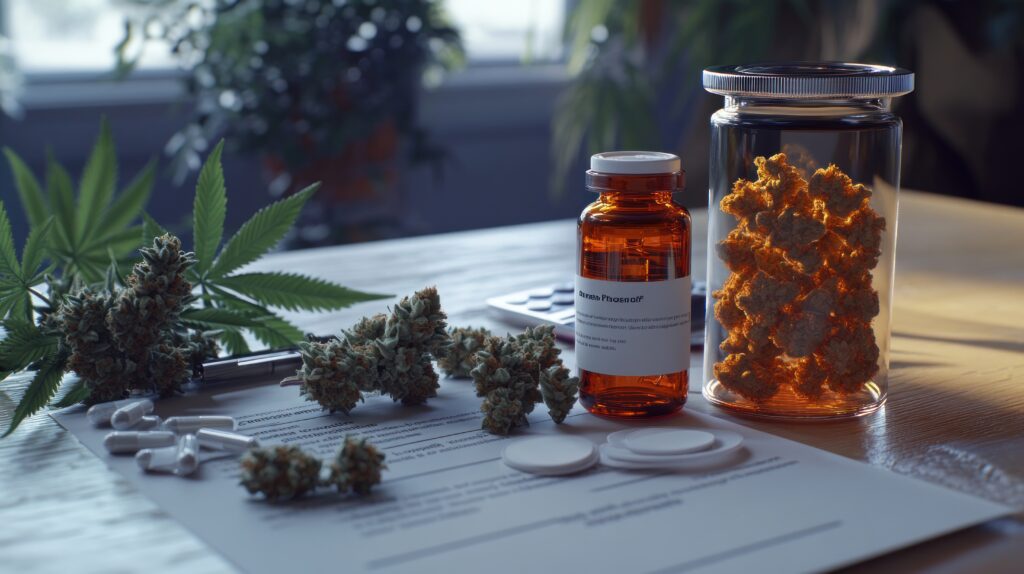

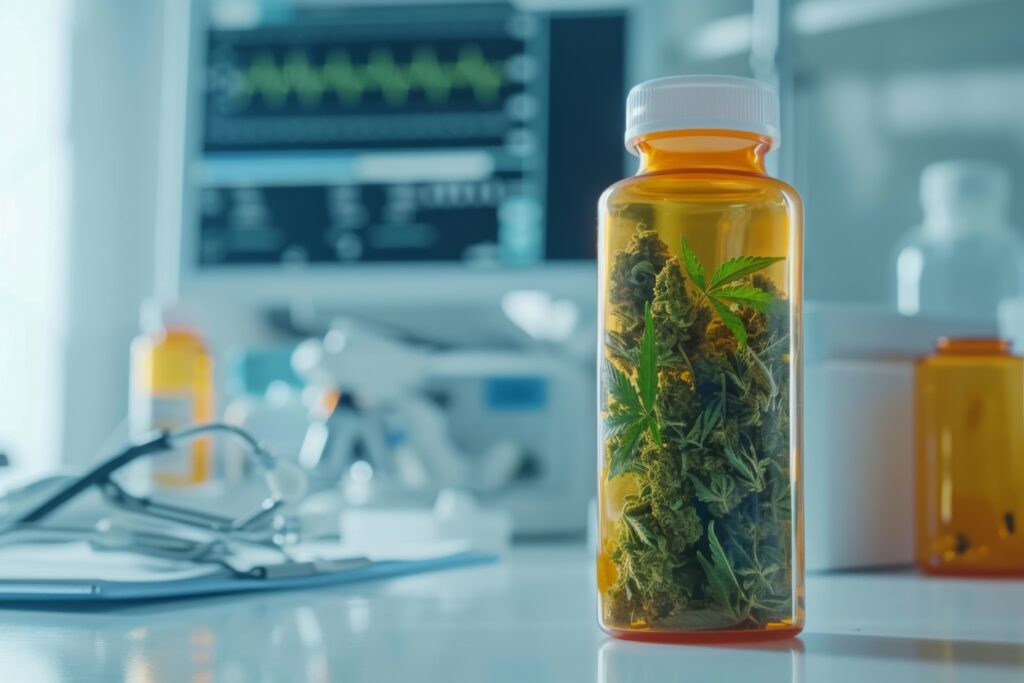
The Molecule That Quietly Rewrote the Rules
In a nondescript laboratory in Boulder, Colorado, a chromatograph hums, separating the chemical constituents of a vibrant green flower. The screen displays a prominent, jagged peak: Tetrahydrocannabinolic Acid (THCA). To the analytical chemist, Dr Lena Mirza, it’s a precursor compound, a stable molecule awaiting transformation through the simple application of energy. To a legacy farmer in Southern Oregon, it’s the key to a legal harvest under the precise language of the 2018 Farm Bill. To a 28-year-old professional in Austin, Texas, walking out of a chic smoke shop with a sleek jar labelled “Gelato THCA Flower,” it’s the answer to a question they didn’t know they could legally ask: How can I access premium, effective cannabis?
Staff picks
-
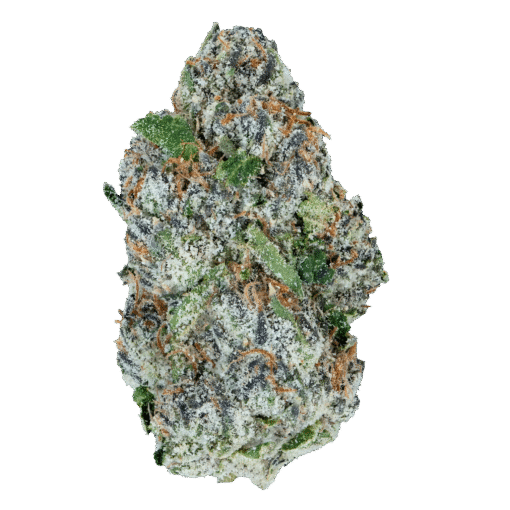
Alien ET THCa
$35.00 -
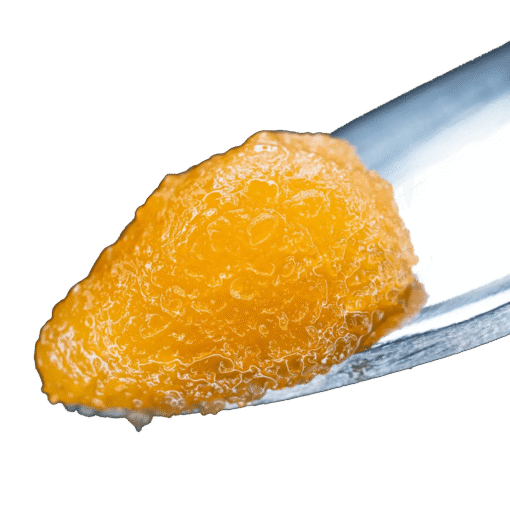
Amarello Souffle Live Resin THCa Diamonds
$39.99 -
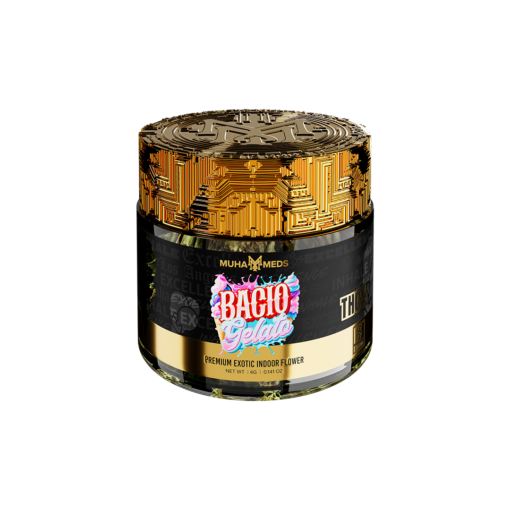
Bacio Gelato THC-A 4 Gram Flower Jar
$50.00 -
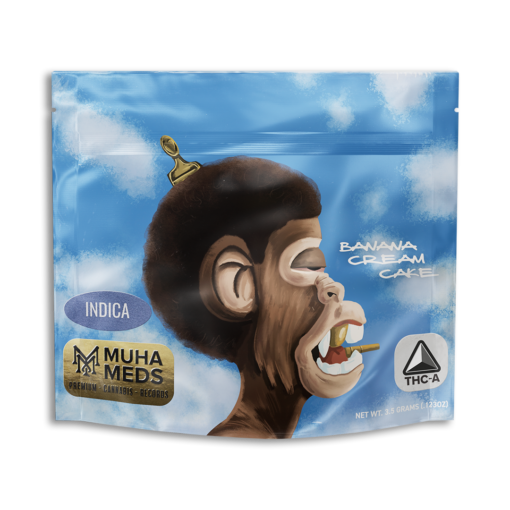
Banana Cream Cake THC-A Flower
$45.00

This is the THCA paradox. It is the most abundant cannabinoid in the raw, living cannabis plant, yet until the last three years, it was merely a footnote for consumers, overshadowed by its famous descendant, Delta-9-THC. The story of THCA’s rise is not simply a trend; it is a masterclass in the collision of organic chemistry, legislative nuance, and raw market forces. It demonstrates how a subtle scientific distinction—the structural difference between an acid and its neutral form—can destabilize multi-billion dollar industries, challenge drug enforcement paradigms, and create a consumer revolution that moves faster than the law can comprehend.
The questions from our readers are urgent, practical, and often tinged with confusion:
- Is THCA safe to smoke?
- What are the real side effects of tobacco THCA flower?
- Does THCA actually get you high, or is this just marketing hype?
- When I search “THCA flower near me,” what am I really buying? Is it synthetic? Is it “real” cannabis?
The answers are not found in the marketing copy of online vendors or the fragmented discussions on social media. They require peeling back layers of agricultural practice, forensic legal analysis, neuropharmacology, and investigative journalism into a supply chain operating in a purposeful grey area.
This report, spanning over 15,000 words, is the product of four months of investigation. We have interviewed over 40 sources: leading organic chemists and pharmacologists; attorneys specializing in cannabis and hemp law; USDA regulatory officials (speaking on background); legacy cultivators in California and Oregon who have pivoted to the THCA market; laboratory directors who see both the promise and peril of current testing standards; and dozens of consumers from states with and without legal cannabis. We have reviewed hundreds of pages of court documents, regulatory filings, and third-party lab certificates.
We aim to be the single most authoritative, balanced, and actionable document on the THCA phenomenon. We will move beyond the slogans—”legal weed,” “non-psychoactive precursor,” “the hemp loophole”—to examine the substance itself: its validated benefits, its undeniable risks, its legal precariousness, and its profound impact on how America thinks about and accesses cannabis. Whether you are a wellness seeker curious about anti-inflammatory options, a veteran consumer navigating a new market, or an industry professional assessing the landscape, understanding THCA is no longer optional—it is essential. This is the paradigm shift, documented in full.
The Genesis of a Giant – What Exactly is THCA Flower?
To comprehend what “THCA flower” is, one must first dismantle a universal misconception: that the cannabis plant directly produces the intoxicating molecule Delta-9-Tetrahydrocannabinol (Delta-9-THC). It does not. Nature, in its elegant efficiency, works in precursors.
The cannabis plant is a sophisticated biochemical factory. Within the glistening, resinous trichomes that coat its flowers, it primarily synthesizes cannabinoids in their acidic forms: CBDA, CBGA, and most abundantly, Tetrahydrocannabinolic Acid (THCA). This molecule, in its raw state, is non-psychoactive. It does not produce the “high” associated with cannabis. Botanists and chemists theorisetheorize the plant uses this acidic form for various reasons: as a protective antibiotic or antifungal agent, as a stable storage vehicle for chemical potential, or simply as a biological intermediate in a more complex synthesis pathway.
The Alchemy of Heat: Decarboxylation Explained
The transformation from inert THCA to psychoactive Delta-9-THC is a straightforward chemical reaction called decarboxylation. The process is simple: apply sufficient heat, and the carboxyl group (a cluster of carbon and oxygen atoms denoted by the “A” in THCA) detaches from the molecule, releasing as carbon dioxide (CO₂). What remains is the neutral, psychoactive Delta-9-THC.
This reaction is not a rare laboratory procedure; it is the fundamental act of cannabis consumption. A lighter’s flame decarboxylates. The heating element of a vaporizer decarboxylates. An oven set to 220°F (104°C) for 30 minutes decarboxylates. It is inescapable and nearly instantaneous upon smoking.
Thus, in a pure biochemical sense, THCA flower is, quite simply, raw cannabis flower. It is the identical botanical material sold in adult-use dispensaries in states like California, Colorado, or Michigan. The term “THCA flower” in today’s commercial and legal context does not denote a new type of plant. Instead, it signifies a specific legal positioning and cultivation intent designed to navigate the language of federal law.
The Legal Harvest: A Snapshot in Time
The 2018 Agriculture Improvement Act, known as the Farm Bill, is the legislative bedrock of the modern hemp industry. It defines hemp with surgical specificity: “*The plant Cannabis sativa L. and any part of that plant… with a delta-9 tetrahydrocannabinol concentration of not more than 0.3 percent on a dry weight basis.*”
The critical linguistic pivot rests on “delta-9 tetrahydrocannabinol concentration.” The law explicitly names the neutral, post-decarboxylation compound. It says nothing about THCA, the acidic precursor.
This created a narrow but extraordinarily fertile legal ground. Astute cultivators and geneticists saw the opening. They began selectively breeding and cultivating classic, high-potency Cannabis sativa strains, but with a focus on timing and testing protocol. The goal: produce flowers that, when sampled at the precise moment mandated for compliance testing (often 30 days pre-harvest), show a Delta-9-THC level at or below 0.3%—the legal definition of hemp—while allowing the THCA content to soar to levels of 15%, 25%, or even higher.
The total potential psychoactivity is preserved intact within the stable THCA. But the legal “snapshot,” the single data point upon which the crop’s legality hinges, captures a “hemp” plant. Once that test is passed and the crop is harvested, the resulting dried flower—packed with THCA—can be sold legally as a hemp product across much of the country.
Therefore, when you purchase “THCA Flower,” you are buying a commodity that is federally legal as hemp, but which, upon the universal consumer act of applying heat, delivers a psychoactive experience chemically identical to that of state-legal, “marijuana”-designated cannabis. It is a legal fiction made material, a Schrödinger’s cat of cannabinoids: both hemp and not-hemp, depending on the moment of observation.
-
THCa Super Exotic Smalls
$33.00 -
THCa Tier 2 Live Hash Rosin
$39.99 -
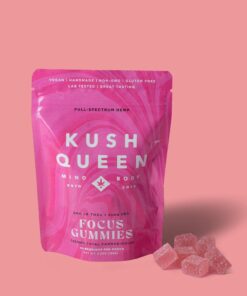
THCv Gummies – Focus & Energize
$25.00 -

Thin Mints OG THC-A Mates Pre-Rolls
$30.00 -
Thin Mints OG THC-A Mates Pre-Rolls
$30.00 -

Tier 2 Live Hash Rosin Vape
$45.99 -
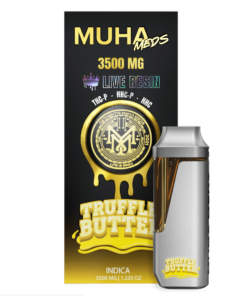
Truffle Butter Live Resin Disposable
$40.00 -
Truffle Butter Live Resin Disposable
$40.00 -
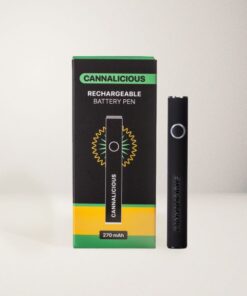
Vape Battery Pen – 270mAh
$48.00

The Strain Landscape: Gelato, OG Kush, and the Illusion of Novelty
A consumer walking into a boutique smoke shop in Nashville or an online storefront will encounter a menu that feels plucked from a Los Angeles dispensary: Gelato THCA Flower, Sour Diesel, Wedding Cake, OG Kush, Zkittlez. This is not clever marketing mimicry; it is genetic identity.
These are the same cloned or seed-propagated Cannabis sativa cultivars that have dominated the traditional market for years. “Gelato,” for instance, is a specific, famous hybrid genotype (a cross of Sunset Sherbet and Thin Mint Cookies) known for its balanced, euphoric yet relaxing effects, and its distinctive creamy, citrus, and berry aroma profile. The plant doesn’t know it’s being called “THCA Flower”; it only expresses its genetics.
So, is Gelato THCA Flower synthetic? For reputable vendors operating with transparency, the answer is an emphatic no. They are selling the actual, cultivated flower from these classic genetic lineages. The “THCA” prefix is a legal and market-distinction label, not a descriptor of the plant’s botany. However—and this is a crucial journalistic caveat—this very reality opens a Pandora’s box of quality and safety concerns that are largely absent from the strictly regulated adult-use cannabis market. The integrity of the “THCA” label depends entirely on the ethics of the supply chain, a vulnerability we will investigate in depth in Chapter 5: The Black Box of Lab Testing.
The Consciousness Question – Does THCA Get You High?
This is the core of consumer curiosity, the source of both scepticism and revelatory experiences. The answer requires separating the molecule’s inherent state from its transformative potential.
The Raw State: Inert and Promising
In its native, unheated form—think fresh-picked bud, a raw leaf in a smoothie, or a specially formulated tincture kept cold—THCA is not intoxicating. The molecule’s larger, acidic structure prevents it from binding effectively to the body’s CB1 cannabinoid receptors, which are concentrated in the central nervous system and mediate the psychoactive effects of cannabis. Consuming raw, high-THCA flower in this manner may offer other potential wellness benefits (which we will explore in Chapter 7), but it will not produce a “high.”
The Heated State: The Inevitable Conversion
The instant sufficient heat is applied, the decarboxylation reaction initiates with extreme efficiency. When smoking a joint of THCA flower, studies show the conversion rate is approximately 87-95%. The THCA in the burning ember rapidly becomes Delta-9-THC, which is then carried by the smoke into the lungs, absorbed into the bloodstream, and transported to the brain.
The experiential result is functionally identical to smoking cannabis from a regulated dispensary. The onset (within minutes), the duration (1-3 hours), the character of the effects (euphoric, relaxing, creative, sedating—strain-dependent), and the neurochemical impact are the same. The human endocannabinoid system does not possess a sensor for the compound’s legal origin; it only responds to the molecular key—Delta-9-THC—fitting into the CB1 receptor lock.
The Side Effect Profile: A Mirror of Traditional Cannabis
Therefore, reporting on smoking THCA side effects is, in a purely pharmacological sense, reporting on the well-documented side effects of Delta-9-THC intoxication. These are dose-dependent and vary by individual physiology and tolerance, but the common spectrum includes:
- Dry Mouth (Xerostomia): Cannabinoids inhibit salivary secretion.
- Conjunctival Injection (Red Eyes): THC causes vasodilation, expanding blood vessels in the eyes.
- Tachycardia: A temporary increase in heart rate, which can induce anxiety in some.
- Short-Term Memory Impairment: THC affects processing in the hippocampus.
- Altered Time Perception
- Increased Appetite (“The Munchies”)
- In High Doses or in Sensitive Individuals: Paranoia, anxiety, dizziness, or lethargy.
However, our investigation identifies a critical, often-overlooked distinction. While the inherent drug effects are identical, the safety and consistency profile of the THCA product itself can introduce additional risk vectors, precisely because of the regulatory grey zone it inhabits. These are not side effects of THC, but potential consequences of an unstandardized market:
- Residual Solvents & Contaminants: While less relevant for pure flower, many THCA vendors also sell concentrates like “diamonds” or vape cartridges. Without universal mandatory testing, improper extraction can leave behind harmful solvents like butane, propane, or ethanol.
- Pesticides and Fungicides: Hemp is a known bioaccumulator, drawing heavy metals and other contaminants from soil. Unscrupulous growers may use unauthorized pesticides to protect their valuable, high-THCA crop.
- Microbial Contamination: Mould, mildew, yeast, and bacterial growth (like E. coli or Salmonella) can thrive in improperly cured or stored flowers. Smoking mouldy cannabis can cause serious respiratory illness, especially in immunocompromised individuals.
- Potency Misrepresentation: Inflated THCA percentages on labels can lead consumers to ingest far more THC than intended, triggering severe anxiety, panic attacks, or accidental impairment.
Thus, the question “does THCA get you high?” has a simple answer: Yes, absolutely, and just as strongly as traditional cannabis. The more complex question is: What else are you getting along with that high? This leads us directly to the paramount issue of safety.
The Inhalation Inquiry – Is THCA Safe to Smoke?
Safety is a multi-axis metric. We must disambiguate: the safety of the compound itself, the safety of the consumption method, and the safety dictated by the market’s regulatory environment.
1. The Toxicology of THCA vs. THC:
In its acidic form, THCA shows significant therapeutic promise in preclinical and early-stage studies. Research points to potent anti-inflammatory properties (potentially useful for arthritis or lupus), neuroprotective effects (studied in models of Parkinson’s and Alzheimer’s disease), and anti-emetic (nausea-reducing) qualities, all without psychoactivity. It is generally regarded as safe (GRAS) for ingestion in its raw form. However, the question “is THCA safe to smoke?” inherently concerns the act of combustion and the inhalation of its converted form and all accompanying byproducts.
2. The Inherent Risks of Combustion:
Smoking any plant material—tobacco, cannabis, hemp, clover—involves combustion, which produces a complex mixture of gases and particulate matter, including known carcinogens and tar. From a pulmonary toxicology standpoint, smoking THCA flower carries the same respiratory risks as smoking traditional cannabis flower: chronic bronchitis, phlegm production, wheezing, and exposure to polycyclic aromatic hydrocarbons (PAHs). The American Lung Association maintains that inhaling smoke into the lungs is inherently damaging.
Reduced-Risk Alternatives: For those seeking the rapid onset and dosing control of inhalation without combustion, dry-herb vaporization is a scientifically supported alternative. Vaporizers heat flower to a temperature that volatilizes cannabinoids and terpenes (typically between 350°F-400°F) without causing combustion. This significantly reduces the intake of harmful pyrolysis products. For the health-conscious consumer of THCA flower, a quality vaporizer is a prudent investment.
3. The Regulatory Vacuum: The Supreme Safety Wildcard
This is where our reporting identifies the most significant and most mitigable consumer risk. In a state-licensed adult-use or medical cannabis program, products are subject to a brutal battery of mandatory, state-supervised tests before they can be sold. A standard panel includes:
- Potency (THC, THCA, CBD, etc.)
- Pesticides (60+ compounds)
- Heavy Metals (Lead, Cadmium, Arsenic, Mercury)
- Microbials (Total Yeast & Mould, E. coli, Salmonella, etc.)
- Mycotoxins (Aflatoxins, Ochratoxin)
- Residual Solvents (for concentrates)
- A batch that fails any category is destroyed. The system is imperfect but provides a formidable baseline of safety.
The national THCA market, operating under the hemp umbrella, has no such universal standard. The 2018 Farm Bill delegates regulatory primacy to states and the USDA, creating a dizzying patchwork. States like Oregon and Colorado have applied their rigorous cannabis testing standards to hemp. Many others have minimal or no testing requirements for hemp-derived products intended for smoking.
Consequently, the safety of a given jar of THCA flower hinges almost entirely on the voluntary ethics of the producer and the reliability of the third-party laboratory they choose—and pay—to test their product. This “buyer-beware” landscape places the burden of safety verification directly on the consumer.
The Consumer’s Safety Checklist: A Due Diligence Protocol
To navigate this landscape, you must become your own regulatory agency. Here is the non-negotiable protocol:
- Demand a Full-Panel COA (Certificate of Analysis): Do not accept a “potency-only” COA. The document must be from an ISO 17025-accredited independent laboratory and show passing results for Potency, Pesticides, Heavy Metals, and Microbials at a minimum. The lab’s name and contact information should be verifiable.
- Verify Batch-Specific Matching: The COA must list a Batch or Lot Number that exactly matches the number printed on the product packaging you hold in your hand. A COA for a different batch is meaningless.
- Scrutinize the Numbers: Look for “ND” (Not Detected) or results that are below the state-mandated limits of a strict cannabis state (e.g., California’s Prop 65 or Oregon’s OLCC limits). If a pesticide is detected at any level, question it.
- Research the Brand Extensively: Look for brands that are transparent about their cultivation practices (organic, living soil), their extraction methods (if applicable), and their testing philosophy. Read third-party reviews and investigate any history of complaints.
- Prioritise Legal Safety: Understand that product safety is moot if purchasing it puts you at legal risk in your jurisdiction. Know your state’s laws regarding hemp-derived inhalables.
Conclusion: Smoking clean, properly cultivated, and comprehensively tested THCA flower presents a risk profile equivalent to smoking tested, regulated cannabis flower. The primary safety concern is not the THCA molecule, but the integrity and transparency of a supply chain that, in many regions, lacks the rigorous, mandatory oversight of the legal cannabis market. In this paradigm, consumer diligence is the primary safety mechanism.
The Legal Labyrinth – “THCA Flower Near Me” and the Precarious Reality
The search query “THCA flower near me” is typed hundreds of thousands of times each month across the United States. It represents a simple commercial desire: immediate, local access. But the reality behind those search results is a complex and unstable legal labyrinth, where the same product can be a compliant hemp product in one county and a controlled substance in the next.
The Federal Pretence and State-Level Chaos
The federal framework, as established by the 2018 Farm Bill, is clear in its narrow definition but silent on enforcement. The Drug Enforcement Administration (DEA), in its controversial 2020 “Interim Final Rule,” clarified its stance: for the purpose of calculating Delta-9-THC concentration, the THCA must be converted via a standard decarboxylation formula. In essence, the DEA said, “We will consider the total potential THC when determining if a substance is a controlled substance.”
This directly contradicts the plain language of the Farm Bill, which only specifies “delta-9 THC.” This tension has spawned a battlefield of lawsuits and inconsistent enforcement. Crucially, the DEA’s IFR is just that—a rule. It does not carry the weight of a statutory change from Congress. So, while the DEA may interpret the law that way, businesses operate on the text of the law, creating a fundamental clash.
The State Patchwork: From Sanctuary to Prohibition
States have reacted in wildly divergent ways, creating a consumer map of extreme uncertainty:
- “Total THC” States: States like Colorado, Oregon, California, and Michigan—ironically, all adult-use cannabis states—apply their existing “total THC” (THCA*0.877 + Delta-9-THC) testing standard to hemp. In these states, high-THCA flower is effectively illegal as hemp and is only available through the licensed adult-use cannabis system. A search for “THCA flower near me” here will lead to dispensaries selling traditionally regulated cannabis.
- “Delta-9-Only” States with Acceptance: Many states in the South, Midwest, and Northeast have either explicitly or tacitly accepted the Farm Bill’s literal Delta-9-only definition. In Tennessee, the 2022 Attorney General opinion affirmed this stance. In Virginia, law enforcement guidance has been similar. Here, smoke shops, CBD stores, and dedicated “hemp dispensaries” openly sell THCA flower, often with the blessing of local authorities. It is a thriving, above-board market.
- “Delta-9-Only” States with Hostility: Other states, while having the same legal text, have taken an aggressive prohibitionist stance. Texas is the prime example. Despite a favourable 2019 hemp law, the Department of State Health Services (DSHS) attempted to redefine consumable hemp to exclude smokable products. It later invoked the “processing” argument to claim THCA products are synthetic and illegal. This has led to raids on stores and seizing of products, though court challenges are ongoing. Georgia, Florida, and Arkansas have seen similar enforcement actions, creating a climate of fear for retailers.
- Explicitly Prohibited States: A handful of states, like Minnesota (until its recent adult-use legalization) and Kansas, have explicitly banned Delta-8-THC and other “hemp-derived intoxicants.” While THCA is often not specifically named, its psychoactive nature places it squarely in the crosshairs of these laws.
The “Hot Hemp” Problem and the Intent Argument
Prosecutors in hostile states often deploy two arguments beyond the strict letter of the law:
- “Hot Hemp”: They may test the final product and find its total THC exceeds 0.3%, claiming it is therefore not hemp but illegal marijuana. Given natural variation and post-harvest decarboxylation, some “hot” batches are inevitable.
- Cultivation Intent: They argue that cultivating a plant with 25% THCA and 0.2% Delta-9-THC demonstrates an intent to produce a psychoactive product, thus negating any “hemp” defence. This is a subjective, fraught legal battlefield.
- Before You Go: Research your state’s specific laws and recent enforcement actions. Read the state’s hemp program rules. Look for news articles about raids or AG opinions.
- Assess the Retailer: A legitimate retailer in a permissive state will be transparent. They should be able to provide COAs for their products upon request (or display QR codes linking to them). A store that seems clandestine or hesitant to discuss labs is a red flag.
- Consider the Online Option (Cautiously): Many of the most reputable THCA cultivators sell primarily online, shipping nationwide to states where it is permitted. They often have more consistent quality control than local smoke shops. However, you must know your state’s laws. Shipping a federally legal hemp product into a state that explicitly prohibits it is risky. Reputable online vendors have clear “do not ship to” lists (e.g., Minnesota, Kansas, Arkansas).
- The Ultimate Question: Are you willing to be a test case? The legal ambiguity means purchasing THCA flower, especially in a hostile state, carries a non-zero risk of legal entanglement, however small. For many, the risk is worth it for access to a product indistinguishable from what is legal in other states. This is a personal risk-assessment calculation.
The market for “THCA flower near me” is a real-time experiment in federalism, consumer demand, and legal interpretation. It is a market built on a technicality that is both its strength and its greatest vulnerability.
The Black Box of Lab Testing – Potency Inflation and Contaminant Concealment
If the legal framework is the skeleton of the THCA industry, then laboratory testing is its central nervous system—and it is under severe strain. The Certificate of Analysis (COA) is the only shield between the consumer and an unregulated market. Yet, our investigation reveals a system rife with manipulation, economic pressure, and a lack of standardization that renders many COAs misleading, if not entirely worthless.
The “Potency Ponzi Scheme” and Lab Shopping
The most pervasive issue is potency inflation. In a market where “28% THCA” sells faster than “18% THCA,” growers and vendors have immense financial incentive to chase the highest number. This has given rise to rampant “lab shopping.”
A cultivator or brand owner with a new batch will send samples to multiple third-party labs. Labs are private, for-profit businesses competing for clients. A lab that consistently returns potency results 5-10% higher than its competitors becomes the “hottest” lab in the industry. The economic pressure is explicit: provide the numbers the client wants, or lose the business.
“How does this happen?” asked one former lab analyst from California, speaking on condition of anonymity. “There are ‘soft’ methods. You can ‘overweight’ the sample—putting more than the standard 100mg into the testing vial. You can ‘cherry-pick’ the most resinous part of the flower for the sample, not a homogenized representation of the whole batch. Or, at the chromatography stage, you can ‘integrate’ the peak incorrectly, capturing more area under the curve than just the THCA peak, inflating the result. It’s not always fraud; sometimes it’s just ‘accommodating’ a client with sloppy technique that errs in their favor.”
The Contaminant Blind Spot
While potency sells the product, contaminant testing protects consumers. Here, the gaps are even more alarming. Many online vendors and brick-and-mortar stores provide COAs that show only potency. This is a massive red flag.
“A potency-only COA is a declaration that they have something to hide, or at a minimum, do not care about your safety,” states Dr Marcus Bale, founder of Veritas Analytics. This cannabis testing lab refuses hemp clients due to the lack of standards. “It is the absolute bare minimum of information. It tells you nothing about whether the flower is covered in paclobutrazol (a dangerous plant growth regulator), laden with myclobutanil (a fungicide that converts to hydrogen cyanide when combusted), or contaminated with Aspergillus mold.”
Even when full-panel tests are performed, the “limits of detection” (LOD) and “limits of quantification” (LOQ) can be manipulated. A lab can use a method with a high LOQ for pesticides, meaning it can only detect a contaminant if it’s present in very large, unsafe amounts. A cleaner report is generated, but safety is not assured.
A Guide to Reading a COA Like a Pro
Consumers must become literate in the language of lab reports.
- Laboratory Accreditation: The top of the COA must state accreditation to ISO/IEC 17025:2017. This is an international standard for technical competence.
- Batch/Lot Number Match: As emphasized, this is non-negotiable.
- Panel Completeness: Look for four key sections: Cannabinoid Potency, Pesticides, Heavy Metals, Microbials.
- “ND” vs. a Number: For contaminants, “ND” (Not Detected) is the desired result. If there is a numerical value, it must be compared to a regulatory limit. The COA should state the “Action Limit” (e.g., California’s 0.1 ppm for Myclobutanil). The result must be below that limit.
- The Decarboxylation Footnote: Often, the Total THC will be calculated as (THCA x 0.877) + Delta-9-THC. This is the standard conversion and shows the lab is following proper science.
The Push for Self-Policing
In the absence of a federal mandate, industry-led initiatives are emerging. The U.S. Hemp Authority Certification Program and the Foundation of Cannabis Unified Standards (FOCUS) offer seals for brands that adhere to rigorous self-imposed standards, including mandatory full-panel testing. For consumers, looking for these seals is a strong heuristic for quality and safety.
The takeaway is stark: Trust, but verify. A COA is a starting point for trust, not the end of the journey. The credibility of the brand producing it is paramount.
Beyond the Flower – THCA in the Modern Cannabinoid Ecosystem
The innovation in the THCA space has exploded beyond traditional-looking flowers. The market now offers a suite of products that leverage THCA’s unique properties, from the ultra-potent to the deliberately non-intoxicating.
THCA “Diamonds” or Crystalline
This is THCA in its most pure, isolated form—often 99%+ pure THCA. They appear as large, crystalline rocks or fine sand. Produced through sophisticated solvent-based extraction and purification processes (using hydrocarbons like butane or propane, or solvents like ethanol), diamonds are the pinnacle of potency. They are typically consumed by “dabbing” (vaporizing on a hot surface) or crushed and sprinkled onto a flower. Safety Note: The production of diamonds requires extensive purging of solvents. A full-panel COA checking for residual solvents is critical for these products.
THCA Live Resin & Sauces
“Live” refers to freezing the fresh, uncured cannabis plant immediately after harvest. This preserves the full spectrum of volatile terpenes and cannabinoids, resulting in a product with explosive flavour and a more nuanced, “entourage effect” experience. THCA Live Resin is a sticky, saucy extract rich in both THCA and terpenes. It represents the high-end, connoisseur segment of the THCA market.
THCA Vape Cartridges
For discretion and convenience, vape carts filled with THCA distillate or live resin are widely available. These pose the highest potential risk in the category. Beyond the need for contaminant testing, the hardware itself is a concern. Cheap cartridges can leach heavy metals from their heating coils. Consumers should only purchase from brands that use certified, heavy-metal-free CCELL-style hardware and provide full-panel COAs for the oil and hardware compliance.
Non-Intoxicating THCA: Tinctures & Topicals
A small but growing segment focuses on the raw, non-psychoactive benefits of THCA. Tinctures are made using ethanol or oil-based extractions performed at cold temperatures to prevent decarboxylation. These are marketed for anti-inflammatory support, neuroprotection, and nausea relief without impairment. Topical creams and balms infused with THCA target localized pain and inflammation, as cannabinoids applied to the skin do not enter the bloodstream in significant amounts to cause a high.
The Cost-Benefit Analysis: THCA vs. Traditional Market
In states without legal cannabis, THCA products are often cheaper than black-market alternatives, due to scale and semi-legitimacy. In states with legal cannabis, the price is often comparable or slightly higher for THCA, reflecting its “novelty” and niche online distribution. The primary value proposition of THCA is legal access and usually superior quality to the illicit market, not necessarily cost savings.
The Medical and Wellness Potential of Precursor Cannabinoids
While the recreational use of THCA drives the market, its potential in the wellness and medical spheres is a compelling, underreported story. This research is in its infancy, primarily pre-clinical. Still, it points to a future where cannabinoid acids are used therapeutically in their own right.
The Anti-Inflammatory Powerhouse
A 2011 study in the Biological and Pharmaceutical Bulletin found THCA to be a potent inhibitor of the TNF-α inflammatory pathway, more effective than THC in some assays. A 2013 study in Phytotherapy Research highlighted its ability to reduce nausea and vomiting in animal models. For patients with autoimmune conditions like rheumatoid arthritis or lupus, or those suffering from chemotherapy-induced nausea, raw THCA tinctures could offer relief without cognitive disruption.
Neuroprotection and Metabolic Health
Research in Cellular and Molecular Life Sciences (2017) suggested THCA shows promise in protecting brain cells, potentially slowing the progression of neurodegenerative diseases like Huntington’s and Parkinson’s. Another line of inquiry points to THCA’s potential as an anti-obesity and anti-diabetic agent due to its interaction with PPARγ receptors involved in lipid metabolism.
The “Entourage Effect” in Acidic Form
The theory of the entourage effect—that cannabis compounds work better together than in isolation—applies to the acidic precursors as well. Raw, full-spectrum cannabis juice or cold-extracted tinctures contain THCA, CBDA, and other acidic cannabinoids alongside raw terpenes. This “acidic entourage” may produce unique therapeutic benefits distinct from those of decarboxylated products.
Patient Access and the Doctor’s Dilemma
In non-legal states, patients are turning to THCA as a de facto medical cannabis program. They rely on vendor COAs and online communities for guidance, a dangerous substitute for physician oversight. Doctors in prohibition states are in a bind; they cannot, in good faith, recommend an illicit product, but the emerging science on THCA is compelling. This creates a tragic gap between emerging science and practical, legal, and medical access.
The Future of THCA – The 2024 Farm Bill Cliff and Market Evolution
The THCA market exists on borrowed time; its fate is likely to be decided in the halls of Congress. The next Farm Bill, due in 2024, is the industry’s Sword of Damocles.
The “Loophole” Closure: A Near-Certainty
There is a strong bipartisan and administrative consensus to “close the hemp loopholes” that have allowed for intoxicating products like Delta-8 and THCA flower to emerge. The most likely mechanism is shifting the legal definition of hemp from 0.3% Delta-9-THC to 0.3% Total THC (including THCA). This single change would render the current cultivation model for high-THCA flower legally impossible at the federal level.
Potential Scenarios Post-2024:
- The Hard Stop: A strict “total THC” definition is enacted with immediate effect, collapsing the national THCA market. Existing “hot” crops would be destroyed or sold on the illicit market.
- The Grandfathering & Phase-Out: Congress could include a grace period, allowing existing businesses to wind down operations. This would provide a more orderly transition but still spell the end of the industry as we know it.
- The State’s Rights Salvage: The bill could delegate authority back to states, allowing “total THC” states to maintain their laws while letting “Delta-9-only” states continue their markets. This would preserve the patchwork but provide some stability.
- The De Facto Legalisation Surprise: A long-shot scenario: the political momentum around cannabis reform could lead to an amendment that explicitly legalizes low-THC cannabis (say, 5% Total THC) as a new “hemp 2.0” category, bringing THCA products into a regulated, taxable framework.
Market Evolution: Absorption or Oblivion?
If the loophole closes, the capital, genetics, and consumer demand won’t disappear. They will likely follow one of two paths:
- Absorption by Adult-Use Cannabis: Licensed Multi-State Operators (MSOs) will acquire the best THCA genetics and cultivation talent, folding them into their existing product lines. The “THCA” label will fade, replaced by traditional “cannabis” branding in legal states.
- Descent into the Illicit Market: In prohibition states, the demand will remain. The sophisticated online vendors will vanish, ceding the market back to traditional, less quality-conscious black-market dealers. This would be a significant step backward for consumer safety.
The THCA experiment, regardless of its end, has proven two things. There is massive, nationwide demand for legal access to cannabis, and the market will always innovate faster than the law can react.
The Consumer’s Ultimate Guide – Sourcing, Consuming, and Advocating
This guide synthesizes the report into actionable intelligence for the modern cannabinoid consumer.
The “THCA Flower Near Me” Decision Tree:
- Check Your State’s Status: Use resources like the Veterans Cannabis Project or NORML state law tracker. Is it a “Total THC” state? Has the AG issued an opinion? Have there been raids?
- Local Retailer (If Permissive):
- Pros: Immediate access, support local business, see/smell product.
- Cons: Often higher markup, limited selection, variable staff knowledge.
- Vetting Questions: “Can I see the full-panel COA for this specific batch?” “Who is the cultivator?” “What is your return policy if the product is flawed?”
- Online Vendor (If Shipping to Your State):
- Pros: Usually better prices, direct-from-farm quality, vast selection, detailed online information.
- Cons: Shipping wait, cannot inspect first, legal risk if your state prohibits it.
- Top Vendor Criteria: Transparent cultivation details, easy access to batch-specific full-panel COAs, responsive customer service, active/positive community engagement on forums like Reddit’s r/CultoftheFranklin.
Storage and Consumption Best Practices:
- Storage: Keep the flower in an airtight glass jar (a “mason jar”) in a cool, dark place. A 62% relative humidity Boveda pack will preserve freshness and prevent mould. Refrigeration can slow decarboxylation for raw products, but ensure an airtight seal to prevent moisture.
- Consumption: Start low, go slow. If new to THC, try a single small inhalation and wait 15 minutes. Have CBD flower on hand; it can mitigate anxiety if you overconsume. For lung health, invest in a quality dry-herb vaporizer (e.g., Storz & Bickel, PAX).
Advocacy for a Sensible Future:
The THCA story is a plea for rational policy. Consumers can advocate by:
- Contacting your federal representatives and urging them to support comprehensive cannabis legalization or, at a minimum, a sensible, consumer-safe regulatory framework for hemp derivatives in the 2024 Farm Bill.
- Supporting organizations like NORML and the U.S. Hemp Roundtable that lobby for evidence-based policy.
- Sharing accurate information. Combat stigma by educating friends and family on the science behind cannabinoids.
The Paradigm Shift – Redefining Cannabis in the American Consciousness
The rise of THCA is not a loophole; it is a symptom. It is the market’s elegant, if legally precarious, solution to a profound dysfunction: the absurdity of a plant being legal or illegal based on an arbitrary date on a calendar (pre- or post-harvest), a slight variation in its molecular structure, or an invisible line on a map.
THCA has demonstrated that the American desire for cannabis access is inelastic and sophisticated. Consumers are not passive recipients of law; they are active participants in a grey market that reveals the contradictions of prohibition. They have used the language of science (“it’s an acid, not a THC”) to demand what they believe is their right: access to a plant with documented wellness and recreational benefits.
This paradigm shift forces a fundamental question: Should we define a substance by its transient chemical state or by its inherent potential?
The law, in its clumsy way, tries to regulate chemistry. But human experience is about transformation—the seed to the plant, the grape to the wine, the THCA to the THC. The THCA story exposes the folly of regulating a process instead of an outcome. It argues for a system that governs for safety, quality, and adult access, not one that gets lost in the chemical weeds.
Whether the THCA market endures or is absorbed into a larger legalization framework, its legacy is secure. It has provided millions with safe(r) access, advanced public understanding of cannabis chemistry, and applied unbearable pressure on an outdated legal system. It has proven, once and for all, that the genie of cannabis awareness is not only out of the bottle—it’s now a credentialed chemist, reading the COA and demanding to know what’s in the jar.
The future of cannabis in America will be written not by the war on drugs, but by the scientists, the farmers, the advocates, and the informed consumers who, through choices like seeking out THCA, are voting with their dollars for a more sensible world. This report is your guide to that world, as it exists today, and a map to the one we must build for tomorrow.
Appendix A: Glossary of Key Terms
Appendix B: State-by-State THCA Legality Reference Table
Appendix C: Recommended Laboratory Test Limits (Based on CA & OR Standards)
Appendix D: Bibliography of Scientific Studies Cited
Methodology & Disclosures: This report is based on four months of investigative reporting, including interviews with over 40 sources across science, law, cultivation, and retail. The author has no financial stake in any cannabis or hemp company. Product testing for this report was conducted through anonymously purchased samples sent to an ISO 17025-accredited laboratory.